
Ispod peke · under the bell
Peka, under the bell above Trogir
An iron bell, a deep bed of embers, and two to three hours in which nobody is in a hurry. Meat, octopus, scampi or vegetables, twelve minutes up the hill from Trogir — this is the dish people drive out from Split and along the Dalmatian coast to eat.
The setting
Tables beneath
century-old olives
The fire is lit in the courtyard long before the first guests arrive. By the time you sit down the smell has been drifting across the hillside for an hour.
Meat or octopus
Which peka should you order?
Four things go under the bell here. They cook the same way and they eat completely differently, so this is the choice worth making before you arrive — every peka is one bell for the whole table, and the table orders it together.
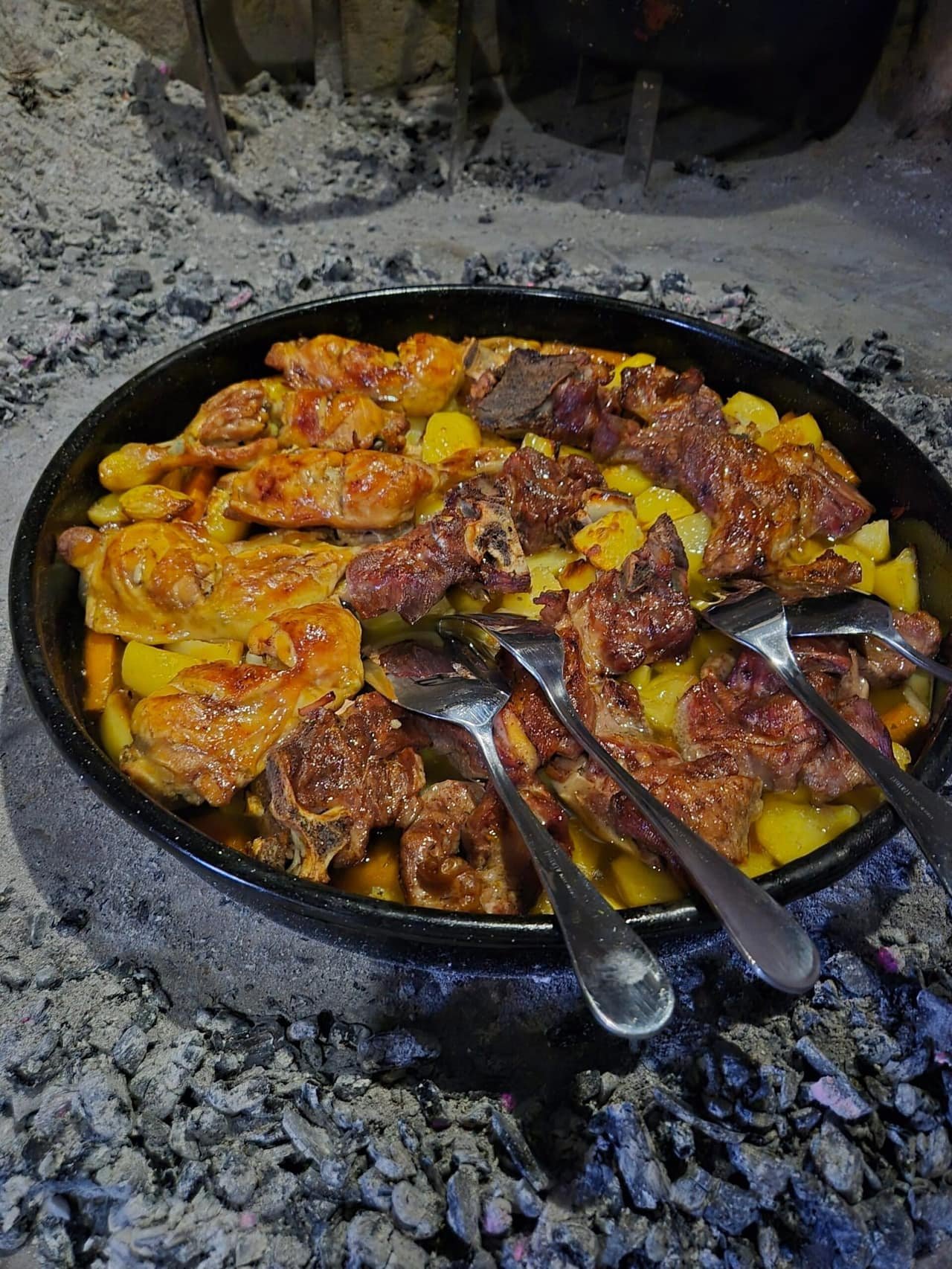
Peka meat — veal, potatoes and time
Veal goes into the pot with potatoes, onion, carrot and oil from our own trees, and then nothing else needs to happen to it. Hours later the meat gives way against a fork and the potatoes have taken on everything it let go of. If you have never eaten a peka, this is the one that explains what the fuss is about.
It is the heavier of the two we are known for, and it suits a table that has come up the hill hungry. Nothing about it can be hurried, which is rather the point.
54 € a person as the full menu — the opening plata, the peka, salad and dessert — or 30 € for the dish on its own. Minimum 4 people.
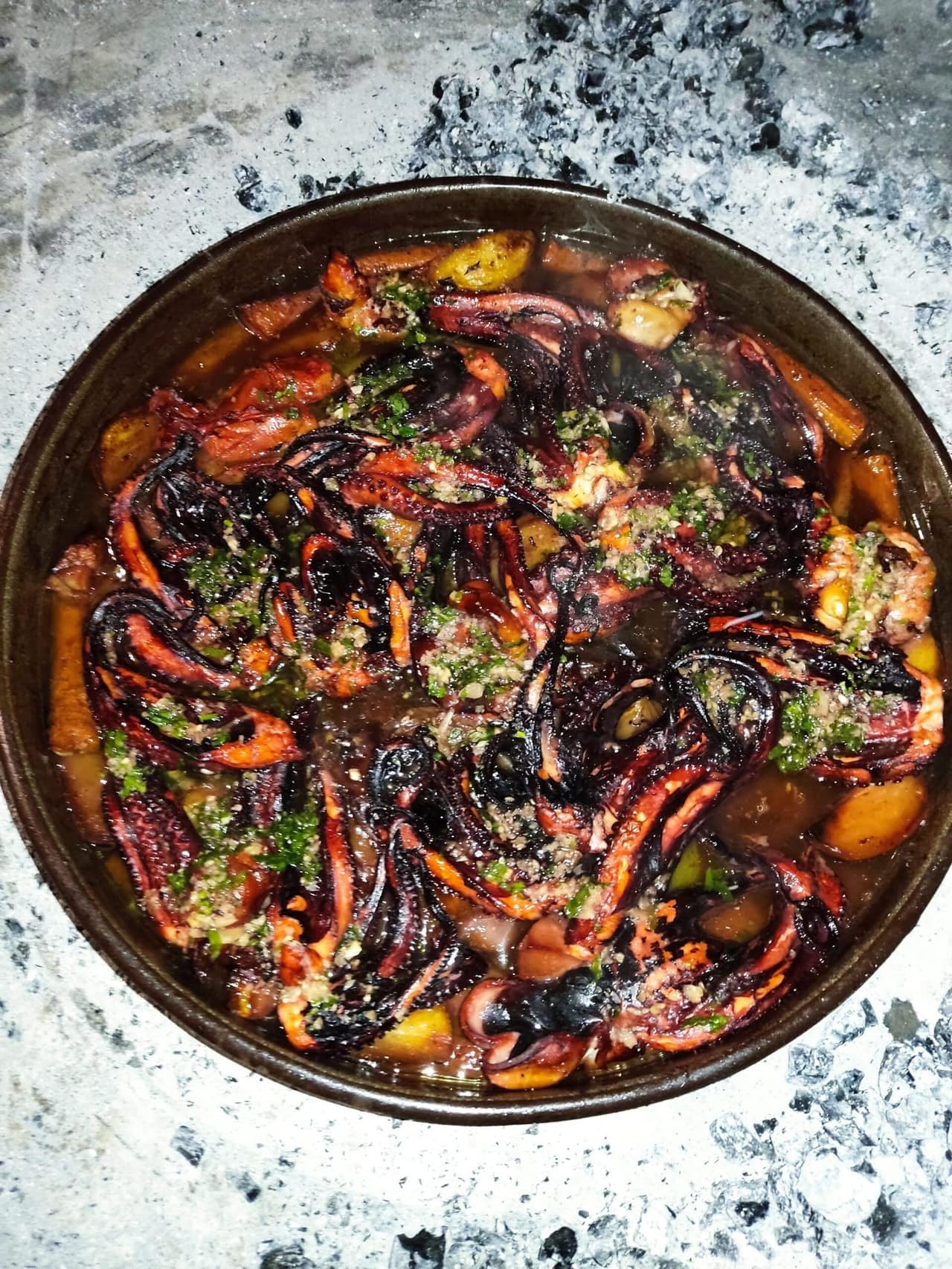
Peka octopus — the one guests write about
Octopus goes in with potatoes, onion, carrot, garlic and parsley. It comes out darker and sweeter than most people expect, and the potatoes underneath are the part they remember and describe badly afterwards. It is the dish our guests name most often when they leave a review.
Order it if you have eaten octopus off a grill and assumed that was as far as it went. Two to three hours under a sealed iron bell is a different thing entirely.
54 € a person as the full menu — anchovy salad, the peka, salad and dessert — or 30 € for the dish alone. Minimum 4 people.
Scampi, or no meat at all
Scampi and potatoes go under the bell the same way, and arrive to be opened at the table with your fingers and a great deal of bread. An octopus salad comes first.
And there is a peka with no meat or fish in it at all — vegetables picked a few steps away, with a chickpea pâté before it. It is the only one that starts at two people instead of four, so two of you can order a peka here without booking a table for strangers.
Scampi: 54 € a person as a menu, 30 € as the dish, minimum 4. Vegetable peka: 42 € a person, minimum 2.
In their words
What guests say about the peka
Reviews published on Google, quoted as they were written. Where a review appears shortened, the ellipsis is the platform’s own — we have not finished anyone’s sentence, and we have not translated anyone’s words.
“The best food I have eaten in Croatia, especially the Peka Octopus Menu!”
“… Incredible local cuisine, a superbe peka, probably one (if not the) best octopus we had! …”
“… dishes cooked under the traditional peka are a specialty of this region and an absolute must-try. … had the octopus under peka and mussels buzara, and everything was simply perfect. …”
◷ Every review, the good and the less good, is on Google and Restaurant Guru
The ritual
How the peka is made
-
I
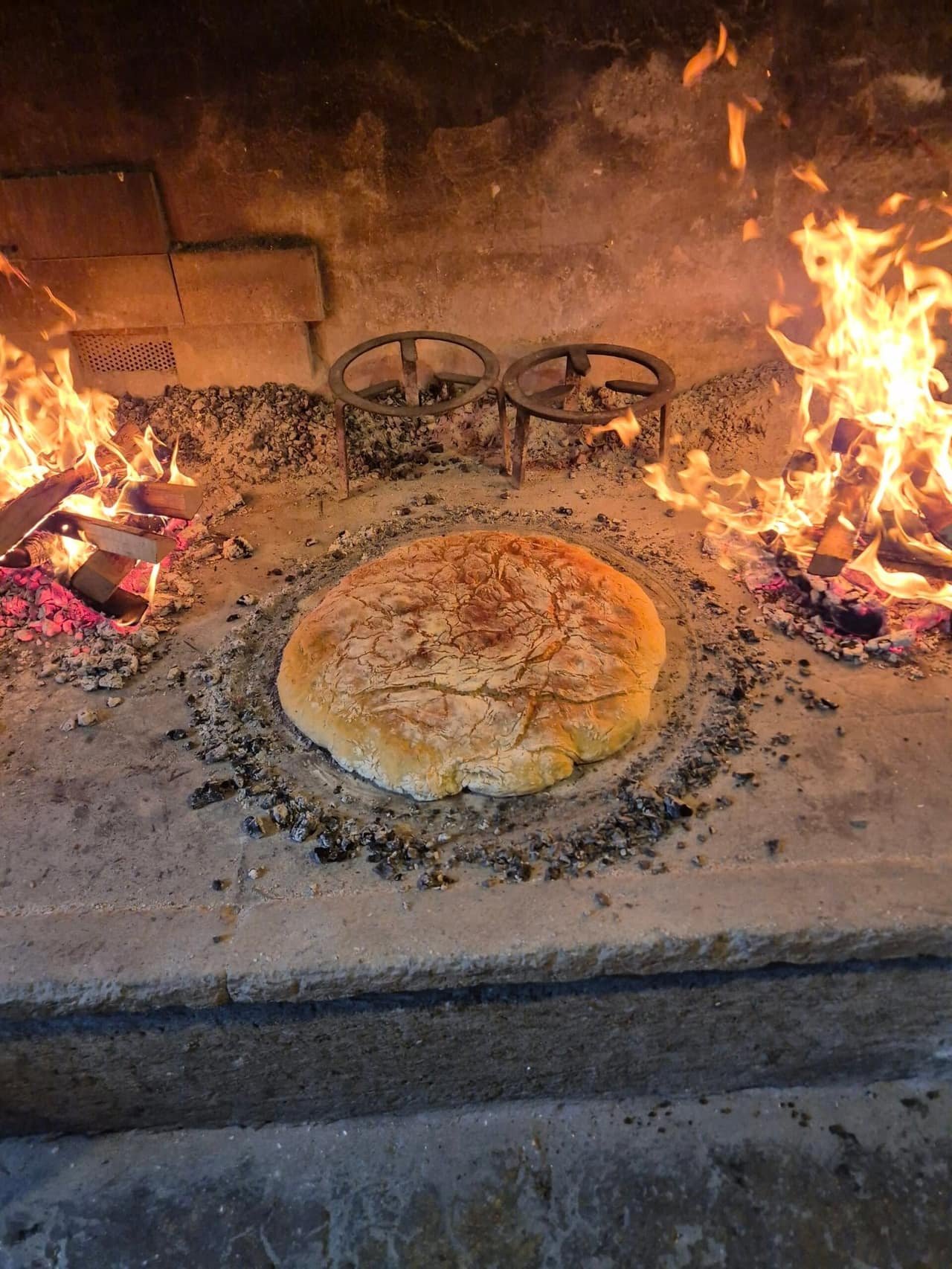
The fire is lit
Olive and oak wood, burned down to deep embers. This alone takes the better part of an hour, and it is why a peka cannot be ordered on arrival.
-
II
Under the bell
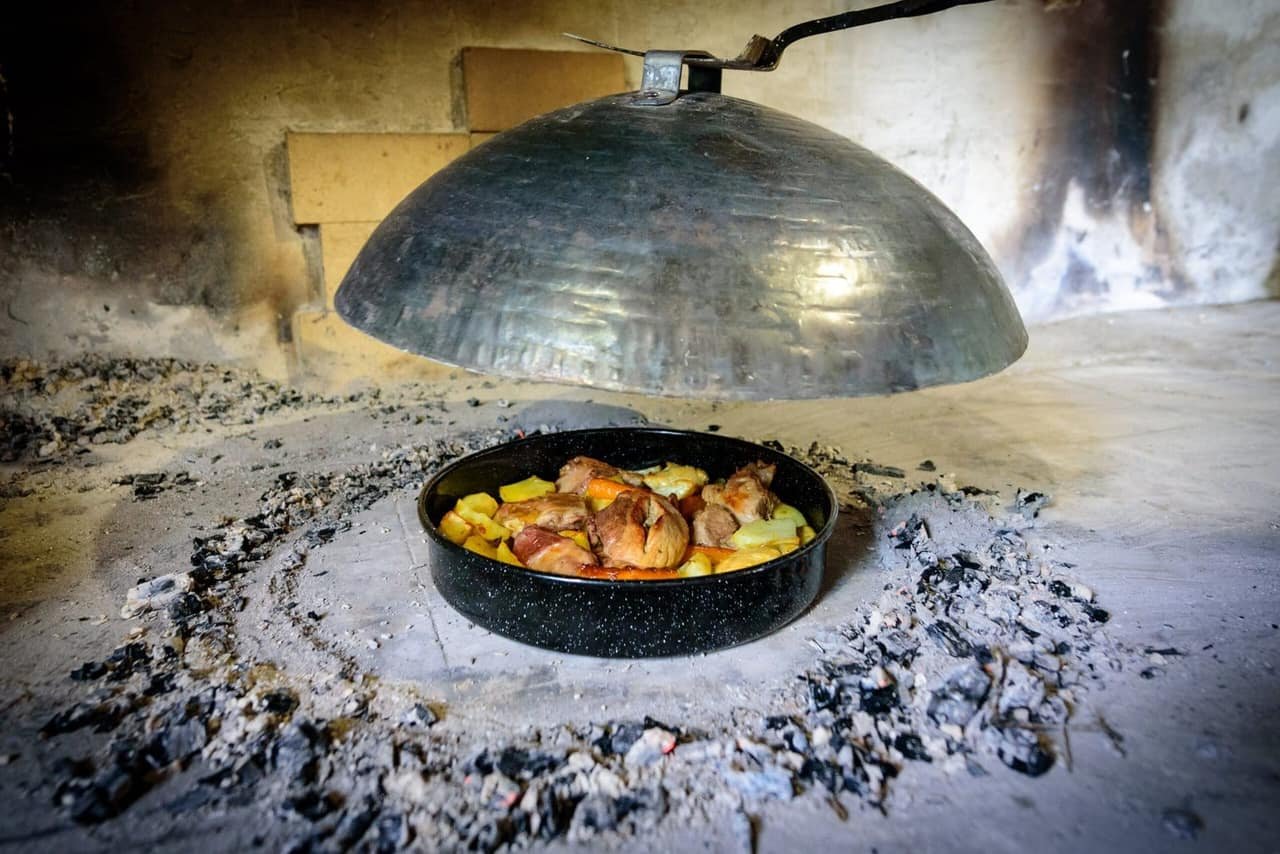
Meat or octopus goes into the pot with potatoes, vegetables, our oil and a little wine. The heavy iron peka goes over the top and seals it all in.
-
III
Buried in embers
Embers are raked over and around the bell until it disappears. Nothing escapes: the steam stays inside and everything cooks in its own juices for two to three hours.
-
IV
The reveal
The bell is lifted at the table. The potatoes have taken on everything the meat gave up, and this is the part guests photograph before they eat.
The long part
Why a peka takes two to three hours
Nothing about a peka is quick, and none of the waiting is for show. Olive and oak have to burn down to embers deep enough to hold an even heat for hours, and that alone is the better part of an hour before anything goes into a pot. Then the bell goes over the top and seals it, and from that moment the food cooks in its own steam with nowhere to escape to.
That is why the meat falls apart, and why the potatoes taste of everything that was above them. It is also why a peka cannot be turned up, checked or rescued. Lift the bell early and you have interrupted the only thing that was happening.
Why you have to order it ahead
Because the fire has to be lit before you set off. We ask at least three hours’ notice for anything under the bell, and for a peka the honest advice is to order in the morning for the same evening — then the timing is ours to worry about rather than yours.
It also means we buy for your table in particular. Nothing sits waiting to be ordered, which is the other half of why it tastes the way it does.
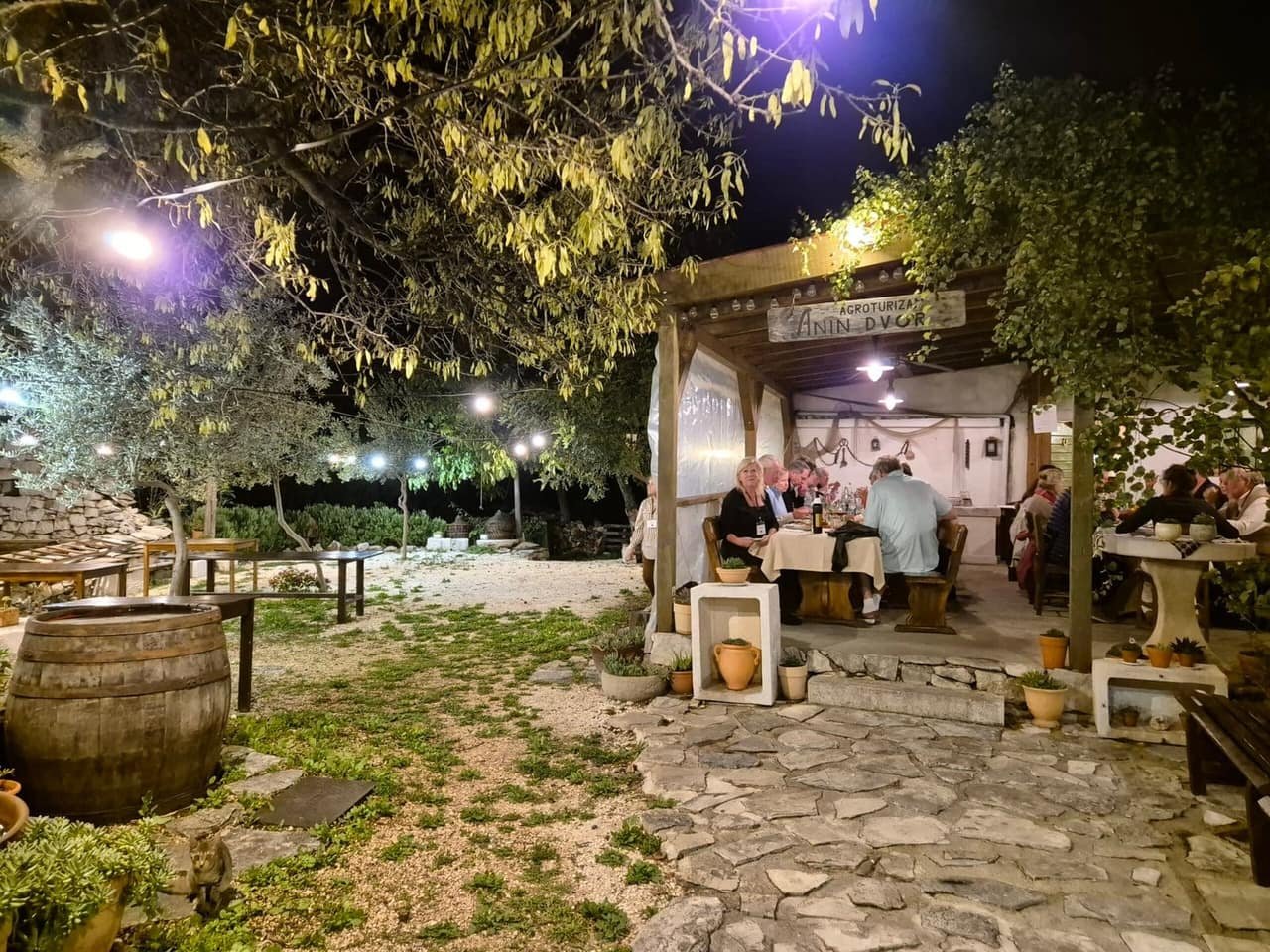
You arrive as a guest, you leave as one of ours
There is no host stand and no queue. Somebody comes out to meet you, a glass of rakija appears, and the plata of pršut and cheese is on the table before you have decided where to sit.
Dinner here takes the whole evening. Nobody will rush you out — the last sitting is at 21:30 precisely so that nobody has to.
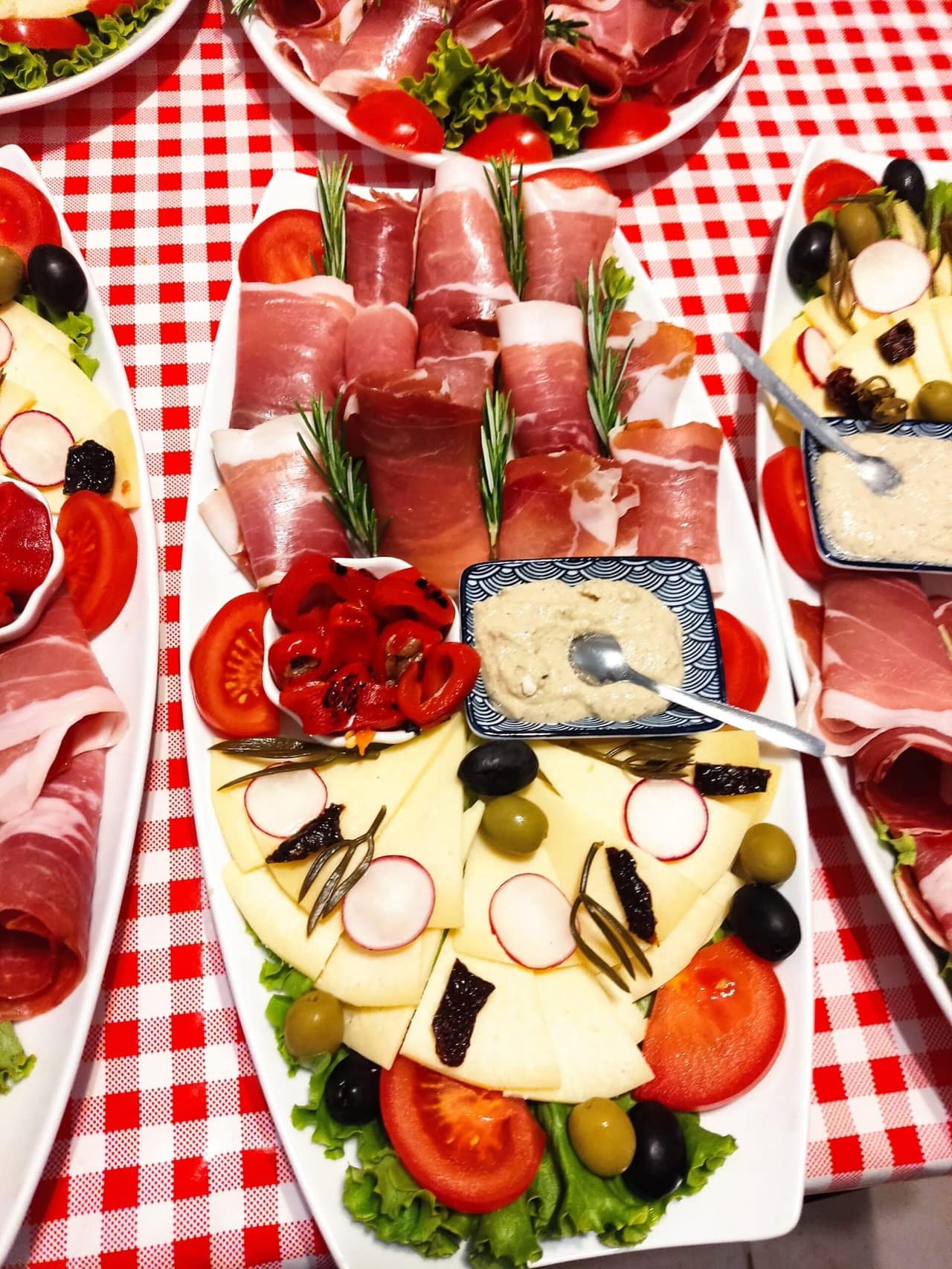
Generous, unhurried, made for sharing
Every menu arrives complete — the plata, the main with potatoes and vegetables, salad, our bread and a homemade dessert. Come hungry; nobody here measures a portion.
◷ Plan for a long, leisurely meal
Good to know
Before you come
Come hungry
A menu is a full meal from plata to dessert. Most people underestimate this on their first visit.
Allow the evening
Two to three hours is normal. Book the sitting you actually want to arrive at, not the one you can just about make.
Order the peka ahead
Grill and sea menus need a few hours. A peka is best ordered in the morning for the same evening.